Pioneering women's health hubs to continue in North East and North Cumbria
The region's first women's health hubs are set to continue after making a successful start in the North East and North Cumbria.
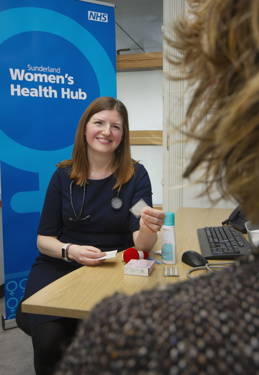
Two pioneering hubs in Gateshead and Sunderland will now be able to develop further thanks to new funding from NHS North East and North Cumbria Integrated Care Board (ICB), bringing the total investment so far to around £1 million.
The hubs aim to give women quicker, more convenient access to care – using their experience to extend services to other parts of the region in the coming years.
Offering a range of services including long-acting reversible contraception (for endometriosis, HRT and heavy menstrual bleeding as well as birth control), menopause clinics and pessary fittings, they are also improving women's healthcare more widely by training primary care staff in the area.
Claire Riley, chief corporate services officer and the ICB's women's health lead, said: "Women in our region face some of the worst health inequalities in the country. Our women live shorter lives and often struggle to get the help they need with things like gynaecological problems, menopause and long acting contraception.
"We have shown that women's health hubs can make a difference, bringing together different services and taking support out into communities. This is the next step. It means we can continue to develop these services, and move towards offering them more widely.
"If we can help more women with shorter waiting times, fewer unplanned hospital admissions and help to get back to work or education quicker, everyone benefits."
Women's health hubs have been developed to improve the way services work together, bringing together menopause care, menstrual health, contraception, screening and pelvic health services in community settings. National studies show that every £1 spent on women's health hubs brings around £5 worth of benefits to the patient and the NHS.
Dr Sangeetha Bommisetty, a Gateshead GP and a clinical lead for the ICB, said: “We are very proud of what we have achieved together in Gateshead. This work is about using the full capacity of our system, particularly the expertise in primary care, to deliver care innovatively, in line with the vision for neighbourhood health. Through the Gateshead Women’s Health Gateway, more women are being treated closer to home, reducing waits and improving flow across services.
"Crucially, we are also taking services into drug and alcohol and homeless settings, ensuring that even the most vulnerable women are not left behind.”
Dr Ruth Thompson, a GP at Sunderland women's health hub, said: "The hub allows us to provide more personalised and accessible care, helping women get the right support without long waits or multiple appointments in different places. This funding will help us expand what works best and support even more women to get the care they need to stay healthy and well."
The funding is part of a five-year women's health programme, which aims to improve outcomes for women and girls across the North East and North Cumbria. The important role of women's health hubs was underlined in this week's publication of the Government's Neighbourhood Health Framework, which aims to help people access health in a convenient way, closer to home.
Alongside the women's health hubs, the region's programme is strengthening data and insight on women's health, testing innovative healthcare solutions, and improving training for the health and care workforce training – while ensuring that women's voices are heard in NHS decision making.